
Literary Analysis of the Yu-Gi-Oh! Series: Episodes 1 - 2

Welcome to the Literary Analysis series on the Yu-Gi-Oh! TV show. Here we will observe the themes and arcs of the characters as they develop. In this article, we will go over episodes one and two. I anticipate going over three episodes normally, but the pilot episodes are chock-full of action that will serve as the basis of how characters act for the rest of the show.
Before we start the analysis, let's recap the events:
• Yugi's grandfather is defeated in a duel against Kaiba, losing the Blue-Eyes White Dragon in the process. Kaiba rips the card, as it is one of four copies in the entire world - he does not want anyone else using Blue-Eyes against him.
• Yugi, alongside the ancient Egyptian pharaoh that lives within his Millenium Puzzle, defeats Kaiba in retaliation with his grandfather's own deck , using Exodia the Forbidden One Exodia the Forbidden One, who's ability to win the game immediately had never been achieved before.
• Joey starts his training with Yugi's grandfather.
• Yugi is sent a VHS tape from Pegasus, the creator of the Duel Monsters card game. Pegasus uses his Millenium Eye to initiate a "Shadow Game," a duel with real stakes. Pegasus achieves victory due to the time restrictions of the duel as well as the Millenium Eye's ability to read Yugi's mind, and captures Yugi's grandfather's soul in a card.
The Collectible Nature of Cards
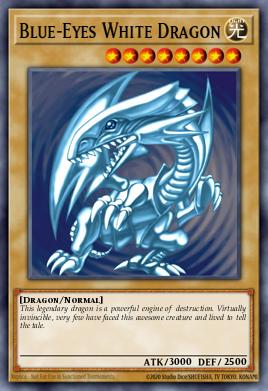
While it may seem obvious, Yugioh, or rather Duel Monsters, exists as a physical card game in the show. That means that the weapons used to fight each other are in limited supply and cannot be magically created nor brought back from being destroyed - at least not yet! The physicality of cards lends to the kidnapping of Yugi's grandfather, and the ripping of the Blue-Eyes White Dragon is a serious deal.
The construction of the player's decks also have to do with the physicality of cards. Yugi notes that Joey's deck has little Magic cards, meaning he's stuck with the base Attack points of his monsters. Kaiba has access to the most powerful monsters in the game, and Yugi has the boon of his grandfather's card shop. If you don't have money or connections, the way you get cards is through ante, giving some serious weight to later duels. Finally, it compounds with the overwhelming unfairness of Pegasus's duel. How could you possibly defeat the creator of the game, especially when he cheats?
Unfairness
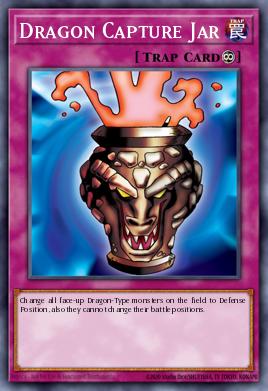
Speaking of Pegasus, unfair advantages are a big theme in these early duels. Frankly, I wouldn't be prepared to play Duel Monsters if I was suddenly taken from my home. And of course, Pegasus's deck is built to counter and play with the opponent, an extension of his twisted nature. Furthermore, the game has a time limit - one that Yugi fails to win the game within, despite declaring the final attack. (Side note: This duel is even more rigorous with its time rules than its real-life counterpart!)
Brains over Brawn
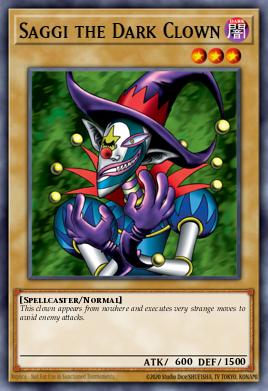
A theme repeated in these episodes is that combining cards is more powerful than just having strong monsters. This concept is introduced first by the combination of Saggi the Dark Clown and "Negative Energy Generator," exemplifying that weaker monsters in the ATK department still have value. The Pharaoh's defeat of Kaiba despite Kaiba owning three copies of the monster with the strongest Attack with a card with an effect like Exodia the Forbidden One shows that every offensive juggernaut has its match.
This is further expanded upon by Yugi's comment on Joey's deck: a mess of monsters. Later on, Joey's deck will be supplemented by Monster effects, Spells, and Traps - many of which are luck-based. His adaptability and improvement shows that even characters without a deck full of rare cards or magic powers can still duel. And speaking of magic...
Ancient Magic
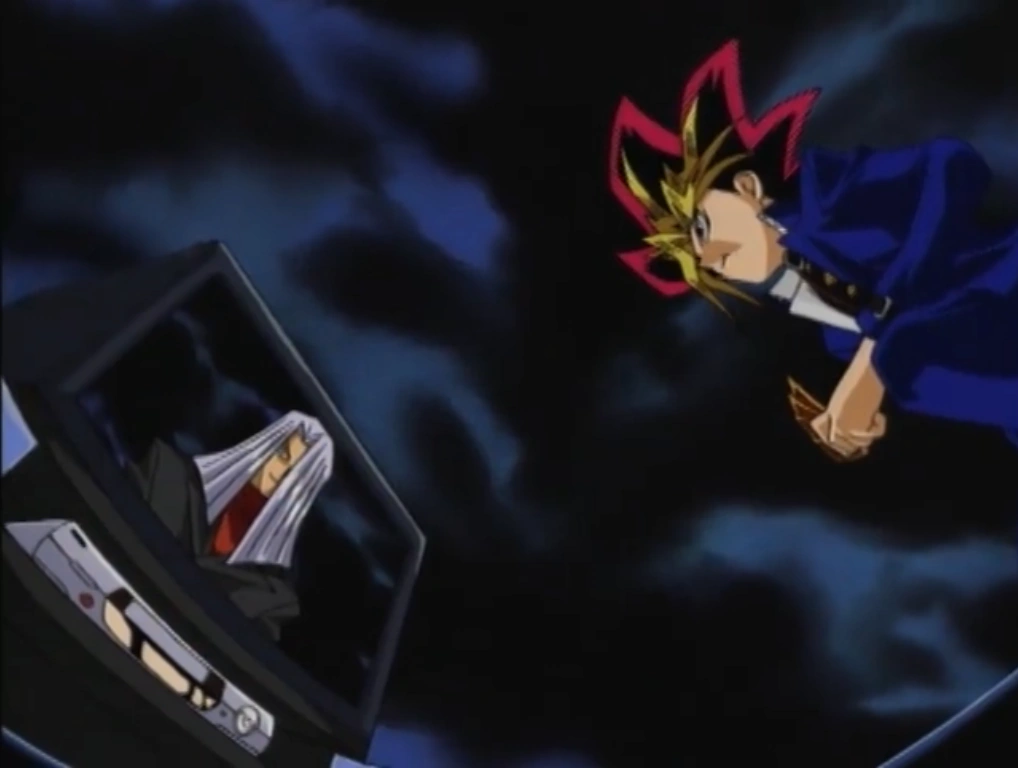
One of the non-dueling recurring aspects of Yugioh is ancient magic that originates from Ancient Egypt. In fact, that's how Yami Yugi came to be! He is a spirit imbued within the Millenium Puzzle. The powers of the Millenium Puzzle are a bit vague, especially at the end of Episode One, where Yami tells Kaiba after his defeat to "open his mind" and inflicts some sort of psychic damage. This is likely a remnant of the original manga, which has Yami take a much more sinister role as a punisher of the wicked - this "opening of the mind" may have made Kaiba less of a villain for the rest of the series, but nonetheless, it is not mentioned for the rest of the series.
But Pegasus's Millenium Eye has a plethora of tricks as well! First, it can force the opponent into a "shadow game" - where the monsters are real! This power comes from the game that Duel Monsters originates from: the Ancient Egyptian life-or-death battles of old, now transformed into a card game. In fact, a certain pharaoh locked away the power of the game as it was too dangerous. Hm...
Ancient magic is often what creates the stakes in what would otherwise be a show just about card games. In the second episode, Pegasus demonstrates this by taking Yugi's grandpa's soul after his loss. It's an interesting direction to confirm the existence of the soul and of spiritual monsters in a world that is otherwise normal!
Game Mechanics
This is yet another piece of early Yugioh that is influenced by its original manga counterpart. Rather, there wasn't much to go off of in the manga to base the gameplay on! While the gameplay loop of summoning and attacking stays true to its real-life counterpart. However, there seems to be a restriction on attacking the opponent directly, meaning you have to face the opponent in battle instead. We don't see what happens when a monster isn't summoned to protect your life points, so we must assume there is a penalty for that.
Furthermore, a monster's Level does not determine whether it needs a sacrifice - you can plop down any monster you desire. This gives more credence to the idea that having a deck full of powerful monsters is key, like Joey thought. Levels are moreso a way to extrapolate a monster's inherent power.
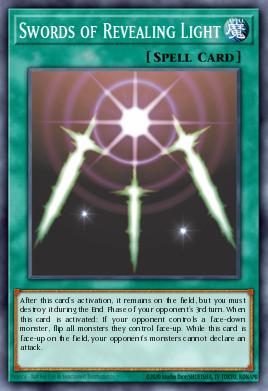
There is also a physicality to the ruleset. That is, Duel Monsters plays by "real-life" logic. For example, Swords of Revealing Light prevents the opponent's monsters from attacking by encircling them in its restrictive blades. However, another monster summoned after its casting is free to attack - because it's summoned in front of the swords, of course! This will become more and more relevant in later duels.
Conclusion
The first two episodes of Yugioh start off with a bang! We are introduced to Kaiba and Pegasus, our primary antagonists, our main form of combat, and a whole history to go alongside it. This world is a strange and unfair one, but our heroes are steadily getting stronger through training and the Heart of the Cards! Next time: a powerful ally lost and a pest-control problem!